Showing posts with label neurotransmitter. Show all posts

Sunday, September 18, 2022

Neurotransmitters

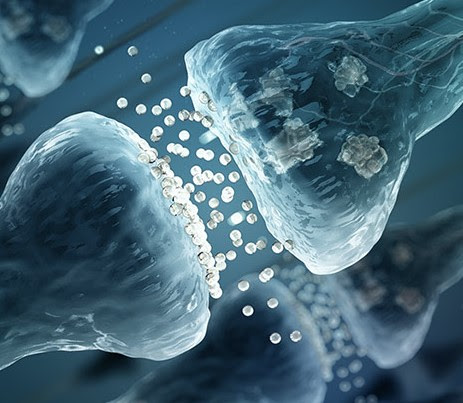
Neurotransmitters are small molecules that carry messages among axons and between the nervous system and other tissues and organs. They are chemical messengers by which neurons communicate with each other. High

Neurotransmitter carries, boosts, and balances signals between neurons (nerve cells) and target cells throughout the body. These target cells may be in glands, muscles, or other neurons.

Network of nerves 0r nervous system controls everything from human mind to his muscles, as well as organ functions. In other words, nerves are involved in everything human being do, think and feel.

Some common neurotransmitters in the brain and body include serotonin, dopamine, glutamate, epinephrine, norepinephrine, and endorphins.

Neurotransmitters are located in a part of the neuron called the axon terminal. They’re stored within thin-walled sacs called synaptic vesicles. Each vesicle can contain thousands of neurotransmitter molecules.

When stimulated, the vesicles merge with the cell membrane of the presynaptic cell, and the neurotransmitter is released into the synapse, or “synaptic space.” The target cells contain receptors where the neurotransmitters can bind and trigger changes in the cells.
Neurotransmitters
Wednesday, November 03, 2021

Dopamine – a chemical messenger

Dopamine is an important chemical messenger in the brain that has many functions. Dopamine, known primarily to be a neurotransmitter involved in almost any higher executive action, acts through five types of G-protein-coupled receptors. It’s involved in reward, motivation, memory, attention and even regulating body movements.

Dopamine is also essential for normal voluntary movement as revealed by its involvement in Parkinson’s disease. The many roles of dopamine in the genesis and regulation of normal and abnormal behavior make it of special interest to clinical psychologists.

It is also acts as a compound that helps in maintaining homeostasis. Dopamine is an organic chemical of the catecholamine and phenethylamine families. Dopamine constitutes about 80% of the catecholamine content in the brain. It is an amine synthesized by removing a carboxyl group from a molecule of its precursor chemical, L DOPA, which is synthesized in the brain and kidneys.

In the reward pathway, the production of dopamine takes place in the ventral tegmental area (VTA), in nerve cell bodies. From there, it is released into the nucleus accumbens and prefrontal cortex.

Dopamine is released during pleasurable situations and stimulates one to seek out the pleasurable activity or occupation. In contrast, low levels of dopamine are linked to reduced motivation and decreased enthusiasm for things that would excite most people.
Dopamine – a chemical messenger

The most popular Articles

BannerFans.com BannerFans.com