Showing posts with label nervous system. Show all posts

Friday, April 07, 2023

Nervous system

Nervous system the part of the human’s body that coordinates its actions and transmits signals to and from different parts of its body.

It is most complex system in the human body formed by a network of more than 100 million nerve cells or neurons assisted by many more glial cells.

Neuron is a functional unit of structure of nervous tissue. While neuroglial cells support and protecting the neurons.

Nervous system controls complicated processes like movement, thought and memory. It also plays an essential role in the things your body does without thinking, such as breathing, blushing and blinking.

General Functions of the Nervous System
•Sensory: gathers info about changes occurring within and around the body; sensoryreceptors, at ends of peripheral nerves, send signals to CNS examples–light, oxygen levels, body temperature
•Integrative: information is “brought together,” interpreted, to create sensations, create thoughts, add to memory, make decisions, etc.
•Motor: sending of signals to muscles and/or glands to elicit a response

Main division of nervous system:
-Central Nervous System (CNS) interpret incoming sensory information and issue instructions based on past e4perience and current conditions.
-Peripheral Nervous System link all parts of the body by carrying impulses from the sensory receptors to the CNS and from the CNS to the appropriate glands or muscles.
Nervous system

Wednesday, July 27, 2022

Nerve impulse

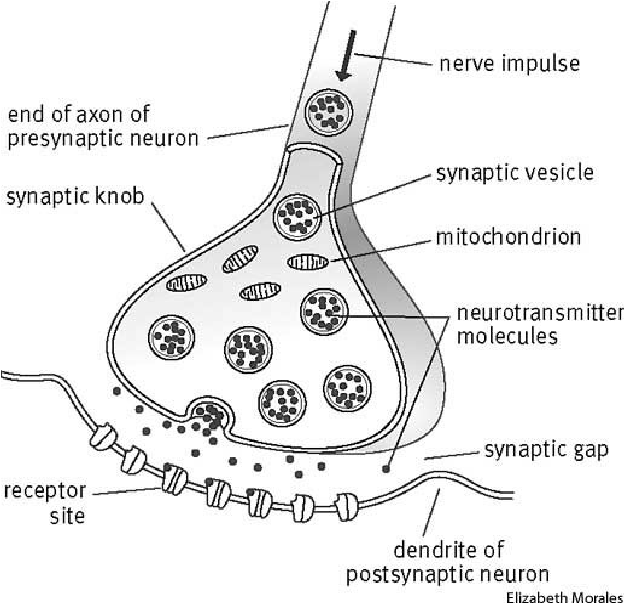
A nervous impulse is an electric signal that transmits messages between the different parts of the body. Nerve impulses are mostly electrical signals along the dendrites to produce a nerve impulse or action potential. This electric signal produced by a neuron when stimulated. This signal is then transmitted by synapses, or connections between the cells.

The transmission of a nerve impulse along a neuron from one end to the other occurs as a result of electrical changes across the membrane of the neuron.

Nerve impulses are critical because they are required for neurons to send information about senses, movement, thinking and feeling to other cell types in the neural circuitry. And an impulse is not fired up just once; it is initiated and then must be repeatedly transmitted along axons.

This signal is relayed along the axon of the nerve cell, bringing a message that instructs an effector to act. For instance, in neuromuscular junction, the nerve impulse moves along the axon of a nerve cell to instruct a muscle cell to contract.

The place where an axon terminal meets another cell is called a synapse. This is where the transmission of a nerve impulse to another cell occurs. The cell that sends the nerve impulse is called the presynaptic cell, and the cell that receives the nerve impulse is called the postsynaptic cell.

There are two types of nervous impulses.
*The first pass from the skin’s receptors or from internal organs to the brain and relay information from the brain to the muscles and glands.
*The others transmit information between two types of neurons.
Nerve impulse

Sunday, October 18, 2009

The Autonomic Nervous System

The Autonomic Nervous System
A major way by which the mid and body communication is through the autonomic nervous system (ANS), a group of nerves that regulate many of the body’s physiological processes, such as heart rate, blood pressure, constipation, sweating and incontinence.

Centers in the brain, principally the brain stem and hypothalamus, receive information about the state of the body and in response activate the nerve fibers of the ANS to maintain appropriate physiological balance.

For example, when you exercise, the ANS stimulates the heart’s pacemaker cells to increase your heart rate, thus increasing the amount of blood pumped to moving muscles.

The autonomic nervous system derives its name for the fact that its activities normally operate without conscious control.

Thus, you do not think about how fast your heart should beat or whether you should sweat to cool yourself when jogging.

Even though the ANS functions without conscious control the signal it sends to the body can be affected by thoughts and feelings.

For example, nearly all students are familiar with the nervous stomach and sweaty palms that accompany taking an important exam.

Realizing that it is possible to do poorly in an exam (a thought) leads to anxiety (an emotion), which activates the ANS to produce symptoms.

Panic has an immediate effect on breathing and heart rate, and stress can constrict blood vessels, causing headaches or high blood pressure.

Many students live fast-paced hectic lives that full of time pressures and stress. Besides doing school assignments many students work at jobs and nearly all try to maintain harmonious social relationship with family and friends, and which take time and attention.

More over, the modern environment is filled with cell phones, the Internet, TV video games, iPods, and other stimuli that compete for one’s attention.

Trying to accommodate all of life’s demands produces near continuous physiologic arousal mediated by the sympathetic nerves of the ANS, causing among other things, sleep disturbances, muscle tension, gastrointestinal symptoms and an increased risk for cardiovascular disease.
The Autonomic Nervous System

The most popular Articles

BannerFans.com BannerFans.com